
Published: May 26, 2026
Using an SBA 7(a) Loan for Real Estate: Rules, Benefits, and Eligibility Explained
This article explains how SBA 7(a) loans for commercial real estate work, what properties qualify, and how to apply for them.
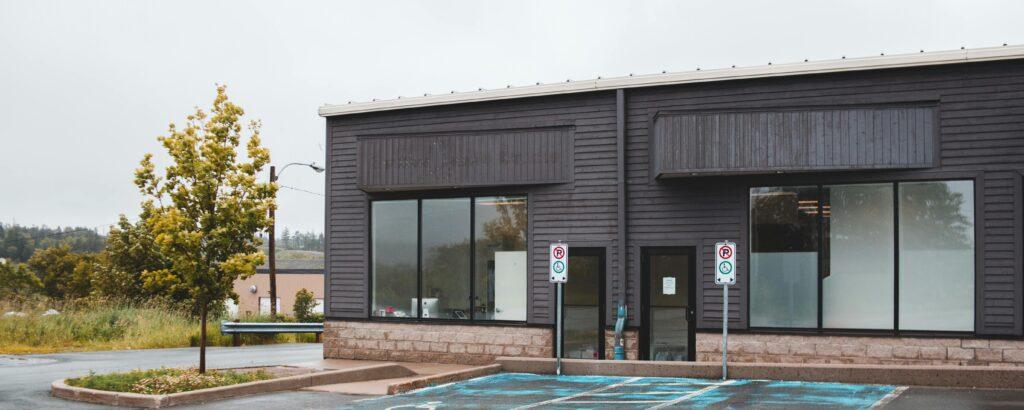
Conventional commercial real estate purchases mean parting with 20-30% of the purchase price upfront as a down payment. That’s a substantial chunk of capital that could stimulate your business growth. An SBA 7(a) loan for real estate changes this equation, because lenders can offer up to 90% financing. You can secure up to $5 million with repayment terms extending to 25 years for real estate purchases. This piece explains how SBA 7(a) loan for commercial real estate works, what properties qualify and how to apply for it.
What is an SBA 7(a) Loan for Real Estate
The SBA 7(a) loan program stands as the Small Business Administration’s main financing option for small businesses. Banks shoulder all the risk in traditional lending, but the SBA partners with lenders to back a portion of your loan. This guarantee structure opens doors that conventional financing often keeps locked.
How SBA 7(a) Loans Work for Real Estate Purchases
The SBA doesn’t hand you money. Approved banks and financial institutions make the loan while the SBA promises to cover a specific percentage if you default. Lenders become much more willing to approve your application and offer better terms because of this arrangement.
An SBA 7(a) real estate loan serves multiple purposes beyond just acquiring property. You can also use these funds to construct new buildings, refinance existing mortgages, or make improvements to buildings you already own, as well as non-real estate uses like business acquisition, equipment purchases, and working capital. The flexibility extends further because you can roll several needs into a single loan. Need to buy a building and purchase the business that occupies it? One SBA 7(a) loan handles both.
Your business cash flow covers monthly payments. You’ll pay both principal and interest each month. The payment amount stays constant for fixed-rate loans. Variable rate loans require different payment amounts when interest rates change.
The SBA Guarantee Structure
The mechanics get interesting here. The SBA guarantee operates on a sliding scale based on your loan size. The SBA backs 85% of the total amount for loans of $150,000 or less. The guarantee drops to 75% for any amount above $150,000.
What does this mean in practice? The SBA guarantees $85,000 if you borrow $100,000. Your lender only risks $15,000. The SBA covers $750,000 for a $1 million loan, while your lender puts $250,000 on the line.
This guarantee comes with fees. You’ll pay a guarantee fee of $2,550 for a $150,000 loan, calculated as 2% of the guaranteed portion. Larger loans carry higher fees. Loans from $150,001 to $700,000 require a 3% fee – this would come to $15,000 for a $500,000 loan. A $5 million loan with a 75% guarantee triggers a fee of $138,125. This breaks down as 3.5% of the first $1 million guaranteed plus 3.75% of the remaining guaranteed amount. The good news? You can roll this fee into your loan proceeds rather than pay upfront.
Maximum Loan Amounts and Terms
The maximum loan amount for an SBA 7(a) loan for commercial real estate is $5 million. This limit represents the ceiling across all uses, whether you’re just buying property or purchasing equipment and funding working capital in combination.
Repayment terms stretch based on how you use the money. Real estate purchases qualify for the longest terms at up to 25 years. This extended timeline reduces your monthly payment burden substantially compared to shorter-term commercial mortgages. Working capital loans get capped at 10 years, while equipment financing depends on the useful life of what you’re buying. The term for loans with combined uses depend on the split of the loan proceeds. In most cases a real estate purchase makes up the majority of the loan, and in that case the loan term could be up to 25 years.
Interest rates are based on the prime rate, and typically range from prime + 1% to prime + 3%. Under SBA guidelines, prime + 3% is the highest allowable rate for loans over $350,000.
One critical limitation exists: you cannot use an SBA 7(a) loan for investment properties. The property must serve your business operations, not generate passive rental income.
Types of Real Estate You Can Buy with an SBA 7(a) Loan
Not every commercial property qualifies for an SBA 7(a) real estate loan. The SBA draws clear lines around what you can and cannot finance, with one rule standing above all others: you must occupy the space for your business operations.
Owner-Occupied Commercial Properties
The key requirement for any SBA 7(a) loan real estate purchase centers on occupancy. Your business must occupy at least 51% of the property’s square footage. This opens an interesting door for mixed-use investments. You can purchase a commercial building, operate your business in 60% of the space, and lease the remaining 40% to tenants. This generates rental income while keeping you compliant with SBA requirements.
But buying a property just to collect rent checks? That’s off limits. The SBA designed these loans to support active business operations, not passive income ventures. You cannot finance multifamily communities or single-family homes through this program. Purchasing a retail property that you won’t occupy yourself also violates the rules.
Buildings for Business Operations
The range of qualifying commercial properties spans nearly every industry you can imagine. Medical and dental offices qualify. Office condos and professional office buildings do too. Pharmacies can secure financing, as can auto-repair businesses.
Food service establishments represent much of SBA 7(a) loan for commercial real estate applications. Fast-food and quick-service restaurant buildings qualify. Full-service restaurants can get financing for both new locations and existing establishments. Bars and clubs also make the eligible list.
Hospitality ventures qualify as well. Hotels and motels use SBA 7(a) real estate loans regularly, though these properties can face stricter underwriting because lenders often view them as higher risk.
Service-based industries find plenty of opportunities. Pre-schools and daycare facilities qualify. The daycare industry is among the fastest-growing, which makes it an attractive option for SBA financing. Assisted living facilities can secure funding too.
Self-storage facilities present another viable option, with revenue in the United States projected to grow at an average annual rate of 2.9%. Retail businesses operating from physical locations also qualify, provided you occupy the space for your operations.
Land for Business Use
You can purchase unimproved real estate with an SBA 7(a) loan, provided you intend to use it for business purposes. This flexibility extends to new construction projects. More, the loan can cover soft costs associated with development, such as architectural fees and environmental site assessments. These additional expenses add up quickly and are often overlooked in construction budgets.
Building new office space can be expensive. New office building construction can exceed $150 per square foot depending on your location. An SBA 7(a) loan handles these costs while offering extended repayment terms that make the monthly payments manageable.
Tenant improvements and renovations to existing business premises also qualify. Whether you’re making small updates or extensive construction modifications to a business property, SBA 7(a) funds can finance the work.
Why Investment Properties Don’t Qualify
The SBA maintains a firm stance against pure investment real estate. These loans serve to support small business growth and operations, not to help you build a rental property portfolio. The government’s goal focuses on stimulating economic activity through operating businesses, not funding passive investment strategies.
This restriction eliminates several property types from eligibility. Apartment buildings, duplexes, and other residential rental properties cannot receive SBA 7(a) financing. Commercial buildings purchased just to lease to other businesses also fall outside program guidelines.
The 51% occupancy threshold creates the dividing line. Fall below it, and your application never even gets started. Meet or exceed it, and you’re eligible to proceed.
Key Rules and Requirements for Using SBA 7(a) for Real Estate
Failing to meet the rules governing SBA 7(a) real estate loan applications can ruin your financing approval. Understanding these regulations before you apply saves you from wasting precious time.
The 51% Occupancy Rule
Your business must occupy at least 51% of an existing building’s rentable square footage. This percentage shifts upwards for new construction projects. New buildings require 60% occupancy by your business, allow permanent leasing of up to 20%, and permit temporary leasing of an additional 20%. The temporary portion comes with strings attached. You must occupy some of that additional 20% within three years and all of it within 10 years.
So if you purchase a 10,000 square foot existing building, your business operations must fill at least 5,100 square feet. You can lease the remaining 4,900 square feet to other tenants. A new 10,000 square foot construction means you occupy 6,000 square feet right away, permanently lease 2,000 square feet, and temporarily lease 2,000 square feet with plans to expand into it.
Lenders perform detailed analyzes of your occupancy percentage to verify compliance. This calculation happens before the loan is approved, not years later. You can’t close on the property and hope to meet occupancy requirements eventually. The numbers must work on day one.
Owner-Occupied Property Requirement
Owner-occupied means you actively run your business from the premises. This isn’t passive real estate investing. The property exists to support your business operations, not to generate rental income as its primary function.
When your business requires a resident owner or manager on-site 24/7, you can finance residential space within the building. But that residential portion can’t exceed 49% of the total property. The residential space must serve an operational necessity, not personal convenience. A security monitoring facility that needs constant human presence qualifies. A warehouse owner who wants to live upstairs for shorter commutes doesn’t.
Business Operation Standards
The SBA sets baseline operational requirements for any business that seeks financing. Your company must be an operating business that functions for profit. Startups and companies with years of history both qualify, but you must demonstrate actual business operations.
Location matters. Your business must operate in the United States. The SBA defines specific size standards that vary by industry to determine if you qualify as a small business. A manufacturing company faces different size thresholds than a retail store or professional service firm.
Creditworthiness forms another pillar of eligibility. You must demonstrate reasonable ability to repay the loan through business cash flow and financial statements. More than that, the SBA requires that you can’t get the desired credit on reasonable terms from non-federal, non-state, and non-local government sources. This “credit elsewhere” test is prevents businesses that could secure conventional financing from tying up SBA resources. However, it’s rarely a concern in practice.
Loan-to-Value Requirements
Loan-to-value ratios for SBA 7(a) loan real estate transactions determine how much you can borrow relative to the property’s appraised value. Specific LTV limits aren’t universally fixed across all SBA 7(a) commercial real estate deals, but lenders evaluate the relationship between your loan amount and collateral value during underwriting.
Different commercial property types carry different underwriting requirements. A medical office building might receive different treatment than a restaurant property or hotel. Lenders assess risk based on property type, condition, and your business’s ability to generate sufficient cash flow for repayment.
The SBA guarantee structure influences how lenders approach LTV calculations. With 75-85% of the loan backed by the SBA, lenders can offer terms that are better than conventional commercial mortgages.
Eligibility Requirements for SBA 7(a) Real Estate Loans
Qualifying for an SBA 7(a) CRE loan hinges on meeting specific business and borrower criteria. The lender reviews your company size, financial health, credit profile and operating track record before approving any financing.
Small Business Size Standards
Size standards determine whether your company qualifies as small under SBA definitions, based on either employee count or average annual revenue over the previous three years. The company’s net income must stay under $5 million after taxes, not counting carry-over losses. The company’s tangible net worth cannot exceed $15 million.
Size thresholds change based on your industry classification. Manufacturing and mining sectors face the employee count cap. Non-manufacturing industries vary based on industry – the SBA assigns specific size standards to each NAICS code, so your actual limits depend on your main business activity.
Calculating your business size includes all affiliates. This includes any other businesses with common ownership or control. For example, if you own two other businesses, they get combined with the business seeking a loan to determine your total business size.
Credit Score Requirements
The SBA doesn’t mandate minimum credit scores for its loan programs. Approved lenders review your overall creditworthiness using commercial lending standards instead. Credit score represents one factor among many, not the sole determining element.
That said, most lenders require a minimum score in the mid-600s for SBA 7(a) loan real estate applications. You’ll find greater approval success with scores above 680.
Lenders review credit in context alongside business cash flow, time in operation, existing liabilities, management experience and available collateral. Strong cash flow or substantial collateral can offset less-established credit profiles in certain situations.
Business Operating History
Your business must operate for profit as an active enterprise. Nonprofits cannot qualify. You must demonstrate invested equity and show that you’re putting your own time and money into the venture.
The SBA requires that you’ve exhausted other financing options. This doesn’t mean you have to get rejected by a conventional lender before seeking SBA financing, however. It just means that you cannot get the desired credit on reasonable terms from non-federal, non-state and non-local government sources before seeking SBA backing – in practice, usually a simple box the lender must check. This “credit elsewhere” test prevents businesses with access to conventional financing from consuming SBA resources.
You’ll need sufficient cash flow to meet debt obligations coupled with adequate working capital after subtracting liabilities from assets. Business owners cannot be on parole, under indictment, or behind bars. You must demonstrate good character based on your track record managing resources and business affairs.
Time in Business Requirements
Startup businesses can get funding, but most lenders want at least three years of operating history. Startups purchasing real estate or funding construction are better off than most due to the real estate that can be pledged as collateral, but still require strong business plans and comprehensive projections, along with possibly needing to front a higher down payment.
Businesses That Don’t Qualify
Several business types face automatic disqualification. Financial businesses that focus on lending such as banks and finance companies cannot receive SBA financing. Passive businesses owned by developers and landlords that don’t use or occupy acquired assets fall outside program parameters.
Other ineligible categories include life insurance companies, pyramid sale distribution plans, businesses deriving more than one-third of gross annual revenue from legal gambling activities, and operations engaged in illegal activities under federal, state or local law. Most private member clubs don’t qualify. Government-owned entities except those controlled by Native American tribes face rejection.
Businesses with owners behind bars, under indictment for felonies, who have previously defaulted on government-backed financing, or with a past conviction for financial misconduct cannot proceed. Companies that focus on political or lobbying activities plus speculative ventures like oil wildcatting are ineligible.
Benefits of Using an SBA 7(a) Loan for Commercial Real Estate
An SBA 7(a) loan for commercial real estate delivers financial advantages that conventional mortgages can’t match. These benefits extend beyond approval to change how you structure your business growth.
Lower Down Payment Options
Many lenders require down payments of 10% for SBA 7(a) real estate loans. This percentage sits well below the 20-30% that conventional commercial mortgages demand.
That difference matters when you’re preserving working capital. A $1 million property purchase often requires $100,000 down with an SBA 7a loan for real estate versus $200,000-$300,000 through traditional channels. The $100,000-$200,000 you save stays in your business and funds inventory, payroll, or equipment purchases.
Not every real estate purchase requires only a 10% borrower injection, however. Your down payment percentage depends on your lender’s assessment of risk factors including credit profile, financial profile, experience, and business history.
Competitive Interest Rates
Interest rates for SBA 7(a) loan for commercial real estate follow a base rate plus lender spread formula. SBA 7(a) loans use the prime rate as their base, to which they typically add between 1.0% and 3.0%. The 3.0% addition is the highest the SBA allows for loans over $350,000, meaning there are no unfair, sky-high rates in SBA lending – even the worst rate you could get isn’t half bad.
These maximum rates stay below what most conventional lenders charge for commercial real estate. You can choose between fixed and variable rate structures. Fixed rates maintain consistent monthly payments throughout your loan term. Variable rates fluctuate as the Fed raises and lowers rates, raising your payments when rates go up and lowering your payments when rates drop.
Longer, Fully-Amortized Repayment Terms up to 25 Years
Real estate purchases qualify for fully amortized repayment terms extending to 25 years – no balloon payments. This extended timeline doesn’t necessarily mean a lower monthly payment, as conventional loans are often amortized over 20-30 years – but the actual loan term is usually only 5-10 years. This means your monthly payments aren’t too high, but then at the end of the 5-10 years you could have to pay the rest of the loan at once in a balloon payment. SBA 7(a) loans being fully amortized – meaning the loan term and amortization term are the same – means your loan is secure for the entire 25 years, giving a business owner valuable certainty in financial planning.
Construction projects get additional flexibility. The SBA adds extra time needed to complete construction or improvements before your amortization period begins.
Building Equity While Operating
Every monthly payment chips away at your principal balance while your business generates revenue from the property. You’re building ownership stake in an appreciating asset rather than paying rent to a landlord. You own the building free and clear after 25 years of payments.
Down Payment and Financing Terms
Financing mechanics separate successful applications from rejected ones. Your down payment percentage and term structure directly affect monthly cash flow and long-term business viability.
Typical Down Payment Percentages
Most borrowers put down 10%, though lenders can sometimes request 15 or 20% to purchase commercial property. Your actual percentage depends on several variables: lender policies, loan purpose, total amount borrowed, credit history, and the financial strength of the business.
How Much You Can Finance
You can borrow up to $5 million through the SBA 7(a) loan program. The SBA’s maximum exposure caps at $3.75 million whatever your loan size. This means the government guarantees $3.75 million on a $5 million loan while your lender covers the remaining $1.25 million.
Fixed vs. Variable Rate Options
Interest rates get negotiated between you and your lender within SBA maximum caps. Fixed rates provide predictability since your payment doesn’t changes for a set period, usually 5 years. Variable rates typically start lower but fluctuate with the prime rate.
A fixed rate at 7.5% means your payment stays the same for 5 years, no matter what. A variable rate at prime + 2% could start at 8.75%, then in a few years go down to 6.75 or up to 10.75%. Banks offering the loan determine fixed-rate availability based on risk assessment.
Loan Maturity Based on Use
Real estate acquisition, construction, or improvement loans extend up to 25 years. Working capital and business and equipment acquisition financing max out at 10 years.
Mixed-purpose loans follow a special rule. Your term gets blended between 10 and 25 years based on how much of the loan is for a real estate purpose.
SBA 7(a) vs. SBA 504 Loan for Real Estate
Your choice between an SBA 7(a) loan for real estate and an SBA 504 loan shapes your financing costs and operational flexibility for years. Both programs serve different needs despite overlapping in commercial property purchases.
Key Differences in Structure
The SBA 504 loan operates through a three-party arrangement. You contribute 10% down, a non-profit Certified Development Company provides 40% of the project cost (which the SBA guarantees), and a traditional lender covers the remaining 50%. The SBA 7(a) real estate loan involves a single lender who provides the full amount with SBA backing. This structural difference affects your application timeline. The 504 process takes longer because multiple parties must coordinate approval. The 7(a) moves faster with one decision-maker.
The 504 loan maxes out at $11.25 million, well above the 7(a)’s $5 million cap. The 504 cannot finance working capital or business acquisitions. It targets fixed assets only – real estate, construction, improvements, and equipment. The 7(a) handles those uses plus business acquisition and working capital.
When to Choose 7(a) Over 504
Pick the SBA 7(a) loan for commercial real estate when you’re buying a business with the property. The 504 program prohibits business acquisition financing. Speed matters too. The 7(a)’s optimized single-lender structure beats the 504’s multi-party coordination if closing quickly affects your deal.
Prepayment penalties favor the 7(a) as well. You’ll face shorter penalty periods if you sell or refinance. The 504 carries more restrictive prepayment terms that lock you in longer.
Comparing Interest Rates and Terms
The 504 offers lower fixed rates pegged to 5-year Treasury bonds. The 7(a) provides both fixed and variable options. Variable rates start lower but fluctuate with the prime rate. Both programs extend terms to 25 years for real estate.
How to Apply for an SBA 7(a) Real Estate Loan
Application success starts with selecting the right financial partner. You apply directly through your lender, not the SBA.
Finding an SBA Preferred Lender
PLP lenders hold delegated authority to approve SBA 7a loan for real estate applications without waiting for SBA review. This speeds up your process by a lot.
Finding a lender can be easy, but finding the right one can be tricky – you can either do it yourself, which gives you the most control, or use an SBA loan broker, which can save time and energy while ensuring you get in with the right lender.
7aSavvy is an SBA 7(a) loan broker that uses our unique combination of experience, expertise, and lender connections to match borrowers with the best lender for their loan. Plus, we get paid through lender referral fees, so it’s free for the borrower.
Required Documentation
Complete SBA Form 1919 (Borrower Information) and SBA Form 413 (Personal Financial Statement), and gather three years of business tax returns, balance sheet dated within 60 days, cash flow statements, three years of personal tax returns for 20%+ owners, business formation documents, and a business plan. Your lender provides the list of exact documents you’ll need.
Property Appraisal Process
Lenders must get appraisals by state-licensed or certified appraisers for all SBA 7(a) loan real estate transactions when proceeds fund acquisition, refinancing or improvements. Appraisals must comply with USPAP standards and stay dated within 12 months of your application.
Timeline From Application to Closing
Expect a 60-90 day timeline from proposal to funding for straightforward deals. Complex transactions can push to 90 days or longer.
Conclusion
An SBA 7(a) loan for commercial real estate delivers what conventional financing rarely offers: up to $5 million with down payments as low as 10%, repayment terms stretching 25 years, and competitive rates that preserve your working capital. The rules matter though. Your business must occupy at least 51% of the property. The space must support active operations rather than passive investment.
The financing becomes attainable when you partner with the right lender. Loan brokering platforms like 7aSavvy streamline the search and connect you with SBA preferred lenders who specialize in commercial real estate transactions. This program turns real estate ownership from a distant goal into a practical reality, whether you’re buying your first location or expanding operations.