
Published: Sep 10, 2026
The Top 10 SBA 7(a) Lenders in Florida (Rates & Terms)
This article breaks down the best SBA lenders in Florida, comparing their rates and what distinguishes each one for your specific needs.
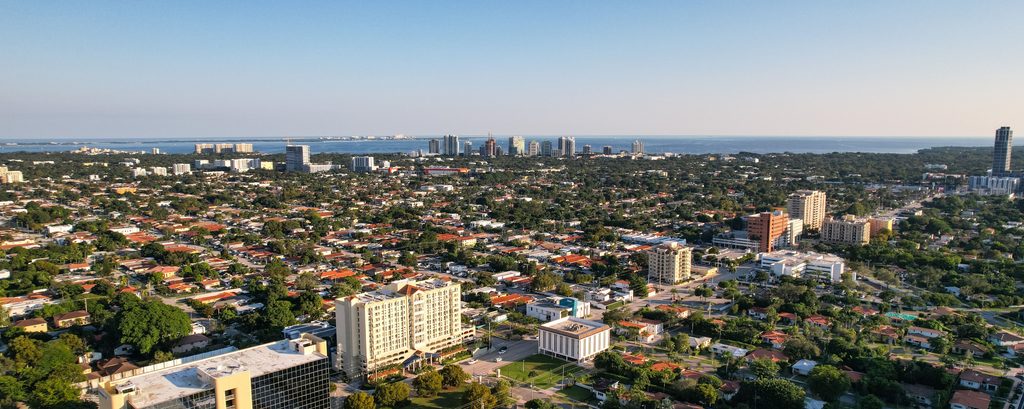
The choice you make among top SBA 7(a) lenders can make or break your financing deal. Florida businesses secured $3.22 billion across 6,302 SBA 7(a) loan approvals during 2025, supporting over 60,000 jobs. But 199 active SBA lenders in Florida compete for your business, and they can vary substantially. The average SBA loan in Florida sits at $512K with a 10.61% rate, slightly above the national average. You need to shop around. This piece breaks down the best SBA lenders in Florida, comparing their rates and what distinguishes each one for your specific needs.
Live Oak Bank
Investopedia named Live Oak Bank the best overall SBA loan lender based on deep expertise in originating these loans. The Wilmington, North Carolina-based online bank holds $15.20 billion in assets and ranks as the 109th-largest U.S. bank. Founded in 2008, Live Oak has closed billions in SBA loans in industries of all types nationwide.
Rates & Terms
Live Oak sets SBA loan interest rates as a spread over the prime rate. Pricing follows a risk-based model that factors in your cash flow, time in business, personal credit, existing debt and available collateral. You’ll need a minimum FICO score of 680 to qualify.
The bank offers two distinct products. Live Oak Express loans range from $10,000 to $350,000 with terms up to 10 years. Standard SBA 7(a) loans go up to $5 million with terms extending to 10 years for business acquisitions or working capital and up to 25 years when real estate is involved. You can finance up to 90 percent of total acquisition costs.
The bank doesn’t require hard personal credit checks during the original review and protects your credit score.
Best For
Live Oak works well for businesses seeking business acquisitions, partner buyouts or real estate purchases. The bank’s Portfolio Management Team provides ongoing support throughout your loan’s life, not just at approval. If you need smaller amounts fast, the Express loan product fills that gap without the full SBA process.
Pros & Cons
Pros:
- Soft credit pull won’t affect your score at first
- Up to $10 million in FDIC insurance coverage through Insured Cash Sweep
- Strong phone support (Monday-Friday, 8 a.m. to 11 p.m. ET)
Cons:
- 680 minimum FICO requirement eliminates many borrowers
- No physical branch locations for in-person service
- Mobile app receives poor reviews with mobile deposit issues
- No cash deposit options for cash-heavy businesses
- New account holders face five-day holds on deposited checks
Huntington National Bank
Huntington National Bank dominates the SBA lending landscape as a top two lender by volume for seven consecutive years. The Columbus-based bank approved $2.09 billion across 6,998 SBA loans in 2025, ranking #2 by total volume. Huntington funded 362 SBA loans totaling $150.4 million in Florida in the 2024 fiscal year.
Rates & Terms
Huntington prices SBA loans at an average rate of 9.75%, sitting 0.57% below the national average of 10.32%. That gap translates to roughly $28,500 in interest savings over a 10-year loan on a $500,000 deal. The bank’s Florida loan size runs $415,388 on average.
Variable rates tied to the Prime Rate with quarterly adjustments are what most borrowers get. Variable rate loans make up 91.6% of Huntington’s portfolio at an average 9.94%. Fixed rate loans account for 8.4% at 7.62%. Loan terms stretch from 7 to 25 years depending on your use of funds. Real estate purchases qualify for 25-year terms with rates averaging 8.44%, compared to 9.86% for shorter-term working capital and business acquisition loans.
Maximum loan amounts reach $5 million with down payments as low as 10%. Terms range up to 10 years for business acquisitions or working capital and extend to 25 years when commercial real estate is involved.
Best For
Huntington stands out for startup financing. The bank allocated 34% of its SBA portfolio to brand-new businesses and funded 2,850 startup loans worth $702.50 million. Most SBA lenders cap startup lending below 15%, making Huntington’s appetite above average.
Business acquisitions represent another strength area. Businesses with 2+ years of operating history receive the fastest approvals and most competitive rates. Real estate deals also benefit from longer terms and lower rates.
Pros & Cons
Pros:
- 9.75% average rate beats national average by 0.57%
- Strong startup lending: 34% of portfolio vs 15%
- No monitoring requirements
Cons:
- Customer reviews cite difficulties reaching support staff
- Limited transparency about rates and terms
- Wait times exceed 30 minutes on phone support
- Florida presence smaller than competitors (362 loans vs 709 for top competitor)
Newtek Bank
Newtek Bank operates out of Boca Raton, Florida and brings hometown advantage to the SBA lending market. The bank ranks #3 nationally by total SBA loan volume and approved $2.03 billion in 4,828 loans during 2025. That lending activity supported an estimated 71,929 jobs through government-guaranteed financing.
Rates & Terms
Newtek prices SBA loans at an average 11.1% rate, sitting 0.79% above the national average of 10.32%. That higher rate reflects the bank’s willingness to fund deals other lenders decline, such as lower credit scores or non-standard collateral situations.
Loan amounts run from $5,000 to $5 million with terms spanning 5 to 25 years that fully amortize. The bank’s whole SBA portfolio carries variable rates tied to Prime, with adjustments each quarter. No fixed-rate options exist in their product mix right now.
Lines of credit reach up to $5 million backed by accounts receivable or inventory. You can access up to 85% of receivables value; inventory financing extends to 50%. These credit lines carry one-year renewable terms.
Prequalification takes less than five minutes with no credit score impact.
Best For
Newtek focuses on businesses with operating history. 86% of their portfolio serves companies with 2+ years in business, totaling $1.74 billion in 4,021 loans. Startups receive just 6% of loan volume at 333 deals. Business acquisitions account for only 2% at 62 loans worth $47.50 million.
Your business needs documented repayment ability from earnings plus three years of tax returns. Manufacturing, wholesaling, services companies, and more fit their lending profile.
Pros & Cons
Pros:
- Florida-based bank with local market knowledge
- $5K to $5M 7(a) loan range handles varied needs
- Five-minute prequalification protects credit score
- Same lending specialist throughout process
Cons:
- 11.1% average rate runs 0.79% above national average
- Customer reviews show polarized experiences
- “Emails went unanswered” per borrower feedback
- Communication can drop off after underwriting begins
- Minimal startup lending (6% of portfolio)
First Internet Bank of Indiana
First Internet Bank of Indiana specializes in bigger deals than most SBA lenders. The digital-first bank ranks #7 nationally and approved $712.30 million in 487 SBA 7(a) loans during 2025. This supported 6,724 jobs. Their average loan hits $1.50 million and runs 3.1 times the national average. This appetite for larger transactions sets them apart from competitors focused on smaller lending.
Rates & Terms
First Internet Bank prices SBA loans at an average 10.13% and sits 0.18% below the national average of 10.32%. That gap might look small. Over a 10-year term on a $500,000 loan, you save roughly $9,000 in interest.
Loan amounts reach $5 million with repayment terms up to 10 years for working capital, equipment or business acquisitions. Real estate purchases qualify for 25-year terms. Variable rates dominate the portfolio at 99.4% of loans and average 10.13%. Fixed rates account for just 0.6% at 10.08%. Long-term loans for real estate carry lower rates at 10.01% compared to 10.15% for shorter-term deals.
The bank also offers SBA Express loans up to $350,000 that are structured as term loans or lines of credit. One catch: expect a $5,000 application fee upfront before approval.
Best For
Business acquisitions represent First Internet Bank’s sweet spot. 54% of their portfolio goes to change-of-ownership deals and totals 251 transactions worth $382.90 million. These businesses see faster approvals because lenders can assess actual financial performance rather than projections.
Startups get minimal attention. Only 3% of loans go to brand-new businesses (18 deals total). 35% of their lending supports minority-owned or female-owned businesses.
Pros & Cons
Pros:
- 10.13% average rate beats national average by 0.18%
- $1.50M average loan handles larger transactions
- Strong diversity commitment (35% to minority and female owners)
Cons:
- Digital-only platform lacks branch access
- Mixed customer reviews on communication
- Minimal startup lending (3% of portfolio)
- “Communication gaps and unexpected fees” reported by borrowers
TD Bank
TD Bank has held the #1 SBA lender position along the East Coast for nine consecutive years, a track record that speaks to consistent execution. The bank ranks #14 nationally and approved $495.20 million across 3,424 SBA 7(a) loans in 2025, supporting 11,288 jobs. TD Bank claimed the #1 spot in number of SBA 7(a) loans for Florida businesses and similarly dominated in South Carolina, New York, New Jersey, New Hampshire, Maine, Vermont, Eastern Pennsylvania, and the District of Columbia.
Rates & Terms
TD Bank prices SBA loans at an average 10.61%, running 0.3% above the national average of 10.32%. That difference might seem minor, but you’ll pay roughly $15,000 more in interest over a 10-year $500,000 loan compared to a lender at the national average rate.
Loan amounts reach $5 million with repayment terms extending to 25 years for real estate-backed deals. Working capital and business acquisition loans max out at 10-year terms. You’ll need a 10% down payment minimum, other than for loan refinance and working capital loans. Variable rates dominate at 89% of the portfolio, averaging 10.64%, while fixed rates account for 11% at 10.35%.
The bank’s average deal size hits $145,000, showing comfort with mid-sized transactions. SBA Express loans go up to $500,000 with simplified applications. Note that TD Bank waives up to $2,500 of SBA packaging fees if you maintain an active TD Bank Business Checking account with auto-deducted loan payments.
Best For
Companies with operating history represent TD Bank’s sweet spot. 71% of their SBA portfolio serves businesses with 2+ years of operating history, totaling $350.60 million across 2,543 loans. Startups receive minimal attention at just 5% of loan volume (39 loans total). Business acquisitions account for 3% at 13 loans worth $16.40 million.
Other SBA lenders in Florida allocate higher percentages to startup deals if you’re launching a new venture. TD Bank reviews actual financial performance over projections, which favors seasoned businesses.
Pros & Cons
Pros:
- #1 SBA lender on East Coast for 9 years
- Up to $2,500 packaging fee waiver with autopay
- Strong Florida market presence
Cons:
- 10.61% rate sits 0.3% above national average
- Minimal startup lending (5% of portfolio)
- Autopay from TD checking account required
- Customer service ratings show room for improvement
Bank of America
Bank of America approved $1.20 billion in SBA loans during fiscal year 2025. This Charlotte-based bank ranks as the top 504 lender nationwide, and as a top 15 7(a) lender.
Rates & Terms
Bank of America structures SBA 7(a) loans from $350,000 to $5 million. Terms extend to 25 years for real estate, 15 years for equipment, and 10 years for business acquisitions or working capital. SBA Express products range from $25,000 to $500,000 with fixed rates available on loans up to 25 years or variable rates for revolving options.
Here’s where things get interesting. Preferred Rewards for Business members receive interest rate discounts between 0.25% and 0.75% based on checking account balances. That discount can shave thousands off your total interest cost over a multi-year term.
Qualification bars sit high. Most products require two years in business with minimum annual revenue of $100,000. Personal credit scores need to hit 680 for SBA loans or 700 for unsecured products.
Best For
Existing Bank of America business banking customers benefit most through rate discounts tied to account balances. Businesses with solid financials and at least two years of operating history fit their lending profile. The bank’s nationwide presence and SBA specialists guide you through the credit process.
Pros & Cons
Pros:
- $1.20B in FY25 approvals shows serious lending capacity
- 0.25%-0.75% rate discounts for Preferred Rewards members
- Decades of SBA lending experience
Cons:
- 1.3/5 stars on Trustpilot, 1.12/5 on BBB
- High qualification requirements (2 years, $100K revenue)
- 700 credit score needed for unsecured products
- Customer complaints cite poor service and long phone waits
Northeast Bank
Portland, Maine-based Northeast Bank funded $42 million in SBA 7(a) loans last quarter, placing them among top SBA lenders nationwide. The bank secured a spot in the top five in both total loan amount and approval number, with 7,800 approved loans in fiscal year 2025.
Rates & Terms
Northeast Bank charges an average interest rate of 10.93%, well above the national average. This is largely due to their acceptance of more borderline and smaller loans other lenders would reject.
Working capital loans reach $350,000 to cover marketing, rent, utilities and payroll expenses. Loan amounts jump to $5 million for other uses, with a special focus on real estate loans.
The bank specializes in lending to industries of all types that others avoid, including restaurants, independent hotels and car washes. No additional fees apply beyond standard SBA requirements.
Best For
Commercial real estate buyers benefit most from Northeast Bank’s expertise. Their Newity partnership provides personal service with quick processing for working capital borrowers nationwide.
Pros & Cons
Pros:
- Minutes to prequalify online
- Funds higher-risk industries
- No additional fees beyond SBA standards
Cons:
- Portland headquarters may limit local Florida presence
- Variable rates only, no fixed options
- Rates higher than national averages
- Working capital capped at $350K vs $5M+ at competitors
Truist Bank
Truist operates branches in 17 states including Florida. This gives you face-to-face access that purely online lenders can’t match. The bank handles both 7(a) and 504 loan programs as an SBA-approved lender.
Rates & Terms
Truist prices SBA term loans at 8.78% on average, much lower than the national average. This is largely because most of their loans come with a fixed rate and a much larger than average size.
Down payments start at 10%, half what conventional loans require. Real estate deals stretch to 25 years and equipment financing goes 10 years. Working capital terms max at 7 years. Existing business checking customers receive 0.50% rate discounts, which is beneficial.
Best For
Businesses operating in Truist’s 17-state footprint benefit most if they have been around for a while. You’ll need 2 years in business to qualify. The bank works for borrowers who value in-person guidance over speed, especially those seeking larger deals.
Pros & Cons
Pros:
- 0.50% discount with business checking
- Branch access in 17 states
- Lower than average interest rates
Cons:
- Only 84 SBA 7(a) loans approved in FY2025
SouthState Bank
Winter Haven, Florida-based SouthState Bank approved $121 million across 229 SBA 7(a) loans in 2025 and earned a #64 national ranking by volume. The bank serves over 1 million customers through 240+ branch locations in six states and holds $44.80 billion in assets as the 47th-largest commercial bank in the U.S. SouthState operates nationwide as an SBA lender with strong regional expertise.
Rates & Terms
SouthState prices loans at an average 9.95% and runs 0.37% below the national average of 10.32%. That gap saves around $18,500 in interest over a 10-year $500,000 deal. All rates are variable.
Two products serve different needs. Small loans run $50,000 to $350,000 with fully digital applications, five-minute prequalification, and terms up to 25 years for real estate or 10 years for business acquisition, equipment, and working capital. Standard loans cover $350,000 to $5 million for real estate purchases, business acquisitions, partner buyouts, and other uses. You’ll need a 680 FICO score and 1.25x debt service coverage to qualify. Packaging fees hit 1% (capped at $2,500) but get financed into your loan.
Best For
49% of SouthState’s portfolio serves businesses with 2+ years of operating history (142 loans worth $59.30 million). Business acquisitions account for 21% at 33 deals totaling $24.80 million. Startups receive moderate attention at 16% of volume, as do businesses with <2 years of operating history at 14%. The bank funded deals across 15 states in 2025, with concentration in Florida (66 loans), Georgia (40 loans), and Colorado (23 loans).
Pros & Cons
Pros:
- 9.95% rate beats national average by 0.37%
- 5-minute digital prequalification
- Strong Florida and Southeast presence
Cons:
- Variable rates only, no fixed options
- Higher FICO requirement (680+)
Celtic Bank
Salt Lake City-based Celtic Bank was a top 10 SBA 7(a) lender in FY 2025, completing 1,482 loans for $592.89 million. They partnered with AI company Casca in April 2026 to automate document collection and compliance workflows. This accelerated an already fast SBA lending process.
Rates & Terms
Celtic Bank finances deals from $350,001 to $5 million with interest rates averaging 10.55% in 2025, above the national average. Terms stretch up to 25 years for real estate deals.
The bank prefers 650+ credit scores. Profitability matters more than years in business, but businesses under two years often struggle to demonstrate sufficient cash flow.
Best For
Borrowers seeking $350K+ for acquisitions or real estate purchases fit Celtic’s profile. The bank also handles refinancing of existing debt.
Pros & Cons
Pros: Casca AI partnership accelerates document processing. Focus on larger deals can lead to a better experience for loans $350k+.
Cons: Borrowers have reported slow servicing response times and repetitive documentation requests. Minimum $350,001 loan excludes smaller deals.
Conclusion
Shopping around for SBA 7(a) lenders pays off in real-life dollars. Rates swing significantly, up to a few percentage points. That spread translates to tens of thousands in interest over your loan term. Your business profile determines your best fit. Startups should look at Huntington’s 34% allocation to new ventures. Companies that have been around for a while benefit from TD Bank’s optimized process. Compare at least two lenders from this list based on your specific situation. The difference between a good deal and a great one comes down to the questions you ask upfront.
Choosing the best SBA 7(a) lender in Florida ultimately depends on your loan size, industry, use of funds, financial profile, and how quickly you need to close. Instead of approaching individual banks one by one, borrowers can also work with 7aSavvy, an SBA 7(a) loan broker that helps match Florida business owners with lenders suited to their specific transaction. 7aSavvy works with borrowers seeking financing for business acquisitions, commercial real estate, equipment, refinancing, expansion, construction, and working capital, helping them navigate lender requirements and identify a stronger fit. The company is paid by the lender, so its brokerage assistance is offered at no cost to the borrower. For applicants who are unsure which Florida SBA lender to approach, or who have already been turned down by one bank, Florida SBA 7(a) loan broker 7aSavvy can provide a more targeted route to finding an SBA 7(a) financing option that fits the deal.